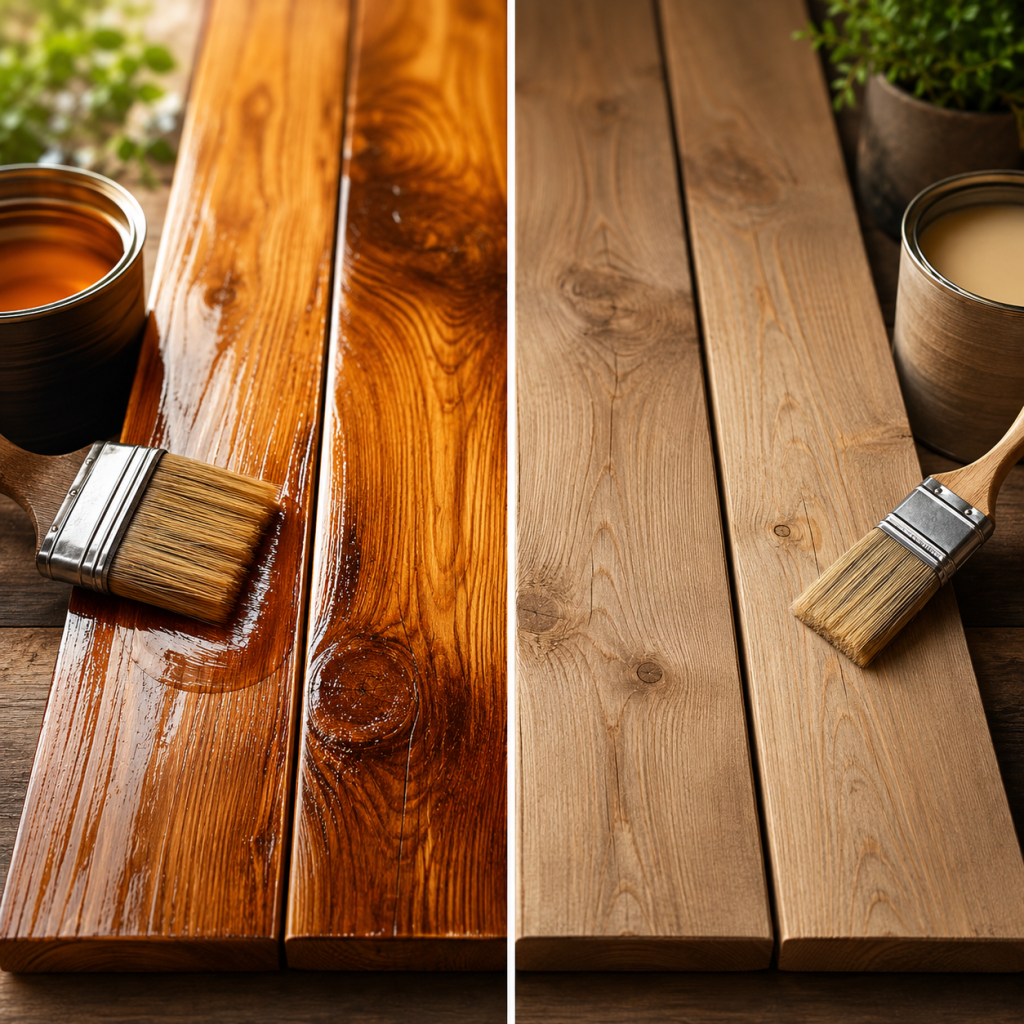
“I want a finish or sealer for my deck, something that will make the timber last longer and maintain its current colour, but I don’t want the finish to peel off after a few months.”
At Sabie Poles, when we hear a customer say this, we know exactly what they mean. In our terms, they’re not looking for a varnish; they’re looking for a quality timber sealer.
Over our thirty years as a pole and timber manufacturer and supplier, we’ve noticed that many consumers are often confused about the difference between timber varnish and timber sealer. Some even believe they are the same thing, when in reality, there are several important differences that every timber owner should understand.
Choosing the wrong product can lead to unnecessary maintenance, disappointing results, and, in some cases, a finish that starts peeling or deteriorating far sooner than expected.
In this blog, we’ll explain the key differences between timber varnishes and timber sealers to help you choose the best finish for your timber project. We’ll also share a few practical tips to help you get the most out of whichever product you choose, so be sure to read to the end.
Understanding how timber works
Before we continue, it may be helpful to understand how timber works, that is, if you don’t already know.
At Sabie Poles, we often say that timber is still “alive” long after the manufacturing process. While the tree itself is no longer living, the timber continues to react to changes in its environment, particularly moisture.
An article from Home-Dzine explains it well:
“A microscopic view of a tree trunk reveals that trees, like everything else in nature, are made up of a complex structure of cells. It is these cells and tubes that carry nutrients essential for the life of the tree. When a tree is cut down, even though it is cut off from its life source, the cells shrink due to a lack of moisture. But add a rain shower and those same cells will once again fill up with water, only to shrink again when the water is gone. This process is commonly known as expansion (when the cells fill up) and contraction (when the cells are empty).”
In simple terms, timber naturally expands when it absorbs moisture and contracts as it dries out. This cycle continues throughout the life of the timber and is one of the main reasons why choosing the correct finish is so important.
Understanding this behaviour will help you better understand what happens when a finish is applied to timber, whether it is a timber sealer or a timber varnish.
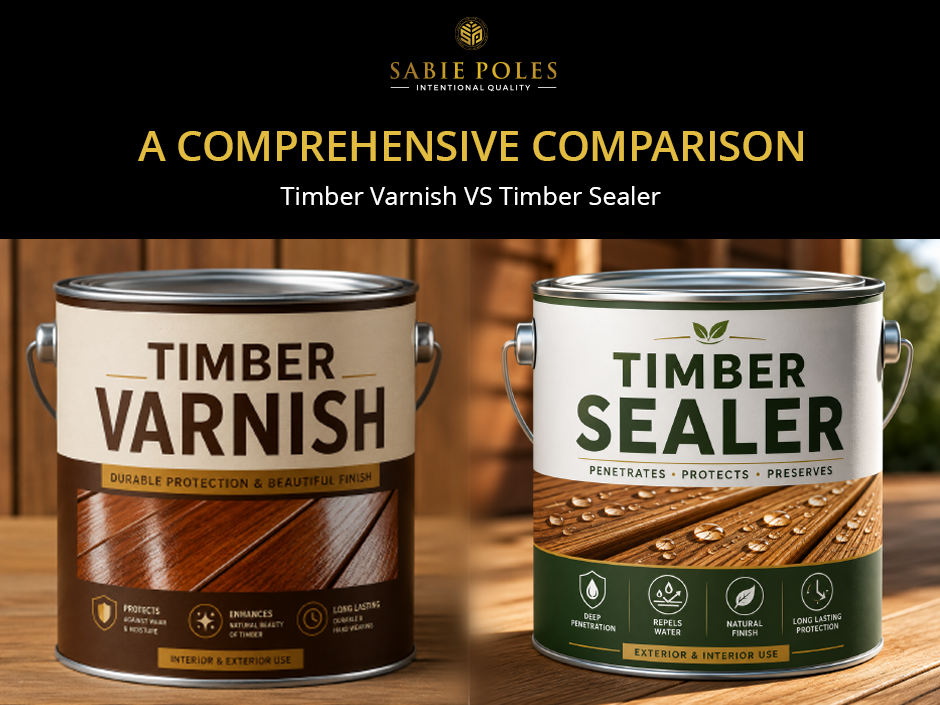
Similarities between timber sealer and timber varnish.
The final goal of both varnishes and sealers is to protect the timber by creating a barrier against moisture and environmental damage while keeping the timber’s grain visible and enhancing the natural beauty of timber.
More similarities are:
- Depending on the brand, they are available with a mixture of oils, resins and solvents designed to enhance and protect the timber from rot, weather and spills.
- They are both applied using similar tools such as brushes, rollers, sprayers and usually require multiple coats.
- They are available with various tints from dark brown to golden brown.
Key difference between timber sealer and timber varnish
One major difference between timber sealer and timber varnish is this: Timber sealers generally penetrate the wood’s pores. In contrast, timber varnishes only cover the surface, creating a hard, physical protective film that can be glossy or satin. Here are more differences:
Timber Varnish
- Forms a protective film on the surface of the timber.
- Creates a glossy, satin, or matte finish.
- Enhances colour and gives the timber a richer appearance.
- Protects against scratches and surface wear.
- Can crack, peel, or flake over time as the coating ages.
- Traps moisture if the coating becomes damaged.
- Requires sanding before recoating.
- Best suited for furniture, doors, floors, and interior timber.
Timber Sealer
- Penetrates deep into the timber fibres.
- Protects the timber from within.
- Maintains a natural-looking timber finish.
- Allows the timber to breathe while repelling water.
- Helps reduce cracking, splitting, and warping caused by moisture movement.
- Will not peel or flake because it doesn’t form a surface film.
- Easy to maintain simply clean and reapply when needed.
- Ideal for decks, cladding, pergolas, fences, outdoor furniture, and other exterior timber.
Ror projects where the timber product will remain indoors timber varnish will be ideal. In contrast, timber sealer is ideal for projects where the timber product will remain outdoors.
In conclusion
Like many products on the market, not all sealers and exterior varnishes are manufactured to the same standard. While there are numerous options available, some fall short of delivering the durability, protection, and performance required for long-lasting, high-quality results.
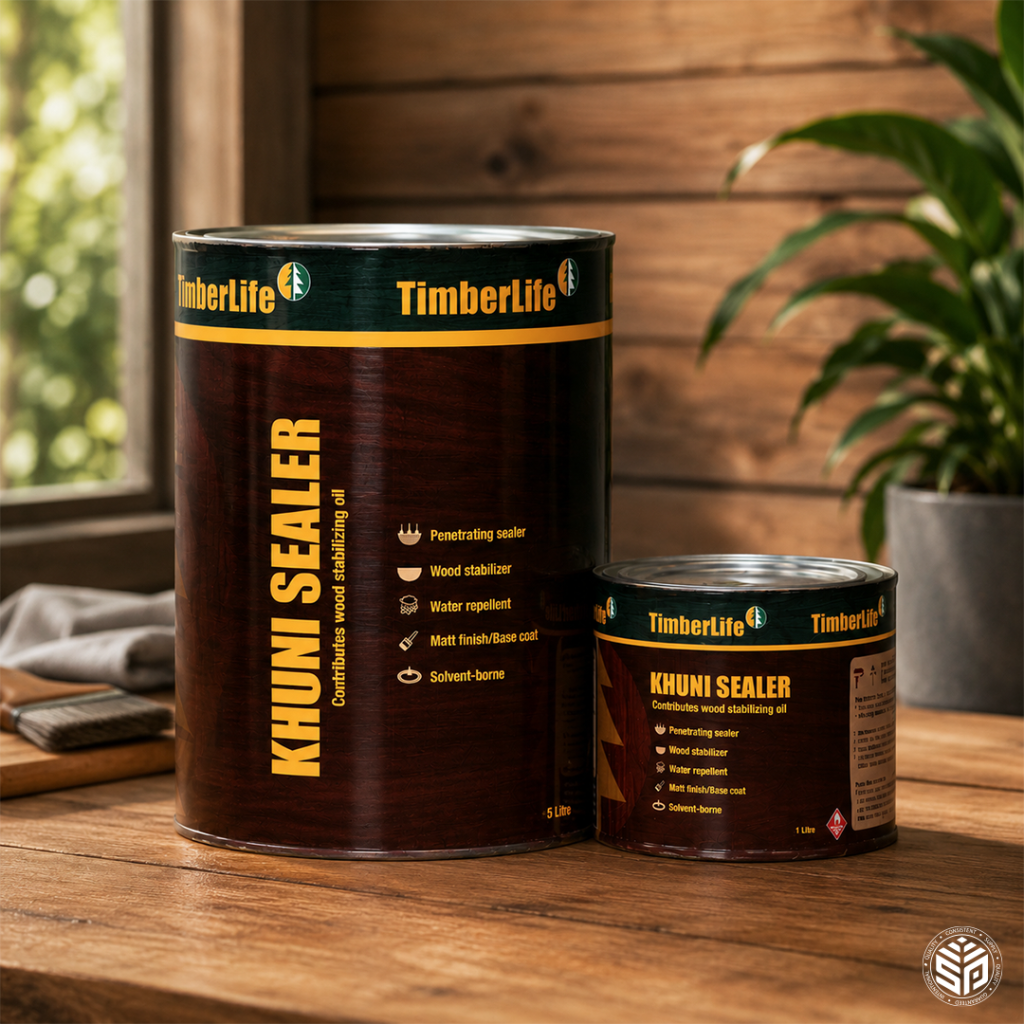
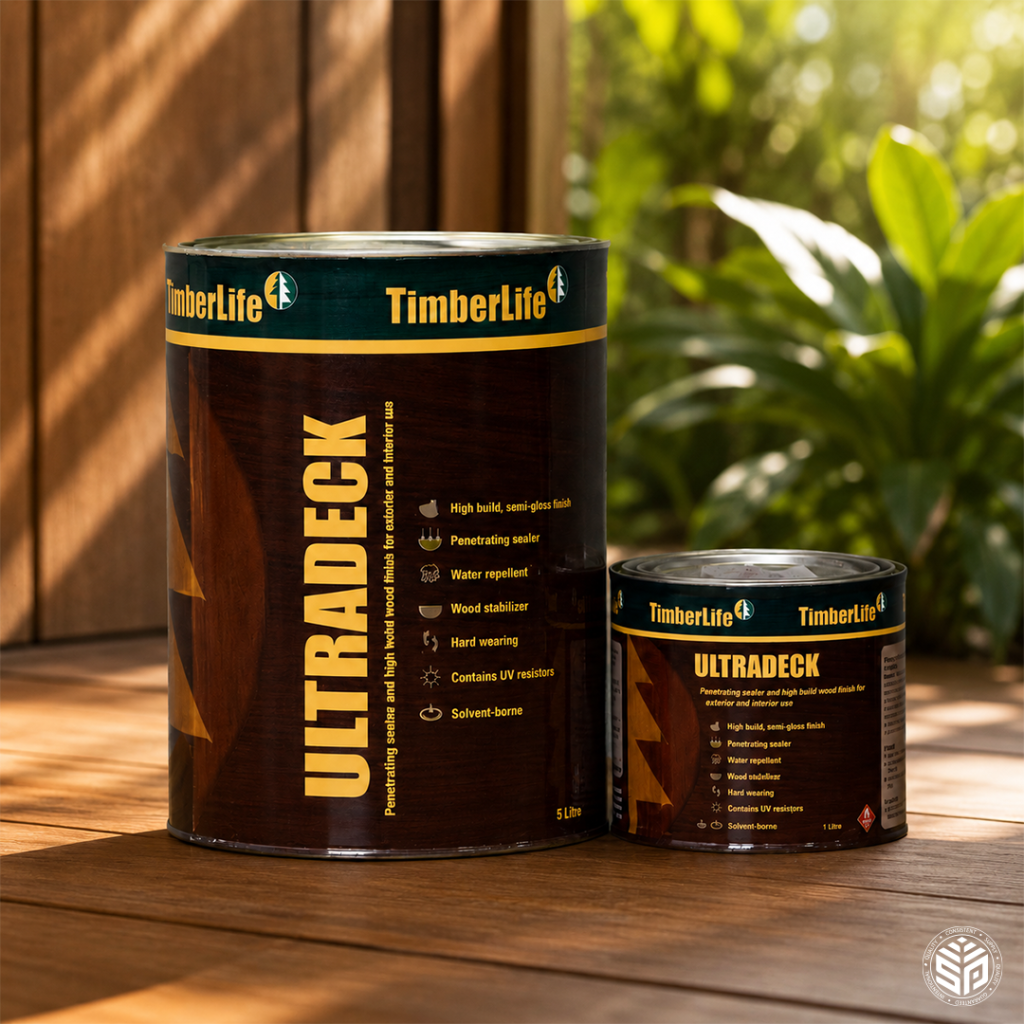
However, there are two quality sealers that come highly recommended by Sabie Poles, it is also available at Sabie Poles. Ultradeck sealer and Khuni Sealer, both premium penetrating timber sealers that protect, nourish and enhance exterior timber while bringing out the natural beauty of the wood. For more information about Ultradeck sealer and other sealer products we have available, click here: Timber Sealers
Are you ready to make the best possible choice? Get in touch with Danie. We’re here to help you make the best timber choices for your project. Call/Whatsapp: 072 838 2838 or email: sales@sabietimber.co.za. We are always here to assist. We export to all SADC countries and internationally.