For decades, timber has faced criticism around sustainability, deforestation, water use, and biodiversity loss. But according to leading forestry experts speaking during the 2026 Talking Timber webinar, many of these perceptions no longer reflect the reality of modern plantation forestry in South Africa.
The webinar brought together experts. Professor Ben du Toit from Stellenbosch University and Dr David Everard, a sustainability and forestry specialist. They unpack one important question:
Is timber truly sustainable?
Their answer was clear: when responsibly managed, plantation forestry is not only sustainable. In fact, it may be one of the smartest environmental choices available to the construction industry today.
Why Timber Has a Lower Environmental Footprint
One of the strongest arguments in favour of timber is its remarkably low embodied energy compared to materials like concrete and steel. According to Prof. du Toit, wood requires far less fossil fuel energy to produce, transport, and process.
“Wood has a negative carbon footprint,” explained Prof. du Toit. “The forest industry sequesters far more carbon than it emits.”
Unlike concrete and steel manufacturing, which release significant carbon emissions, timber products continue storing carbon long after harvesting. Irrespective of what it is used for, in buildings, furniture, or even paper products.
This makes timber construction an increasingly attractive solution in a world focused on decarbonisation and climate-conscious building practices.
South Africa Relies on Plantation Forestry
South Africa has relatively small natural forest resources compared to many parts of the world. Natural forests in regions like Knysna and the eastern escarpment are ecologically valuable. However, they grow slowly and cannot sustainably meet industrial timber demand.
Plantation forests solve this challenge by producing large amounts of timber on a relatively small land footprint.
Prof. du Toit highlighted that South African eucalyptus plantations can produce around 22 cubic metres of wood per hectare annually. Pine plantations, on the other hand, average about 15 cubic metres. Natural forests, by comparison, produce only a fraction of that growth.
This efficiency means fewer hectares are needed to meet timber demand, reducing pressure on indigenous forests.
Forestry Water Use In South Africa Is Well Managed
One of the most common criticisms of plantation forestry is that timber plantations are “water guzzlers.” However, the webinar presented a far more balanced scientific perspective on the issue.
According to Prof. Ben du Toit, plantation forestry in South Africa uses only slightly more water than the natural vegetation it typically replaces, such as grasslands or fynbos. Research discussed during the webinar showed that the difference is relatively small, averaging around 4% more water use overall.
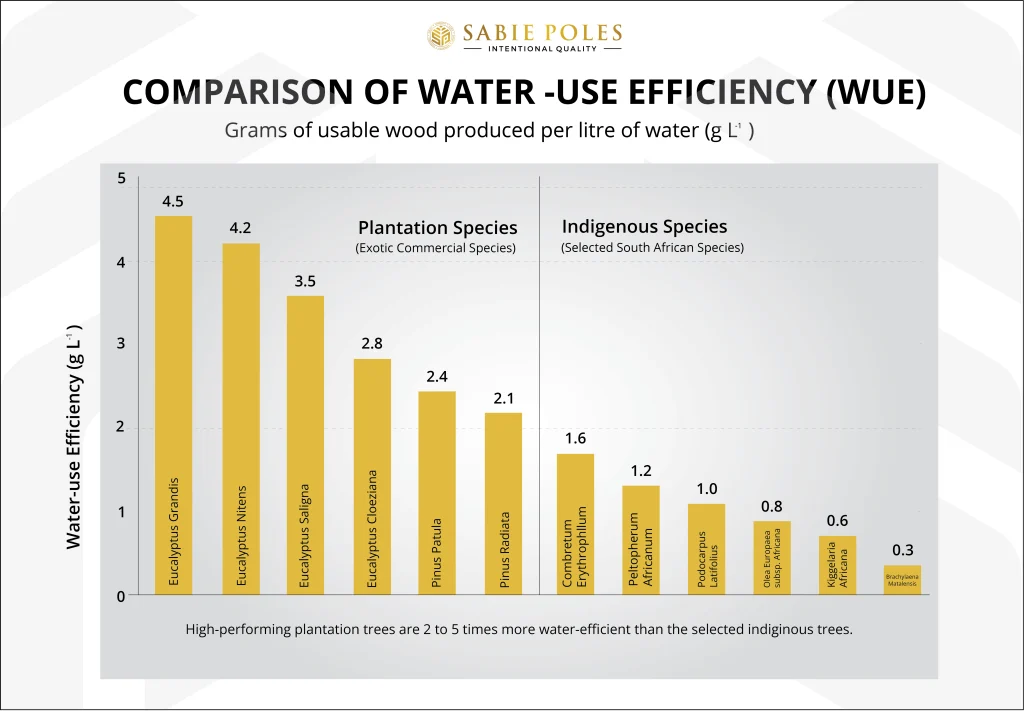
Importantly, forestry experts emphasised that water use cannot be viewed in isolation. The real question is how efficiently that water is converted into usable material.
Research highlighted during the discussion also showed that many commercial plantation species have a far higher water-use efficiency than slower-growing indigenous tree species. In practical terms, this allows South Africa to produce large volumes of timber on a relatively small land footprint instead of placing greater pressure on natural forests.
“It makes sense to have a few intensively managed plantations where surplus water exists,” explained Prof. du Toit, “rather than harvesting natural forests inefficiently.”
The webinar also highlighted that forestry water use in South Africa is tightly regulated. Plantation forests operate under water-use licensing systems, and the sector uses only a small percentage of the country’s total available water resources overall.
Rather than being uncontrolled “water guzzlers,” modern plantation forests are carefully managed systems designed to balance timber production, environmental sustainability, and responsible water use.
Biodiversity and Conservation Inside Forestry Landscapes Are More Than Trees Planted wall-to-Wall
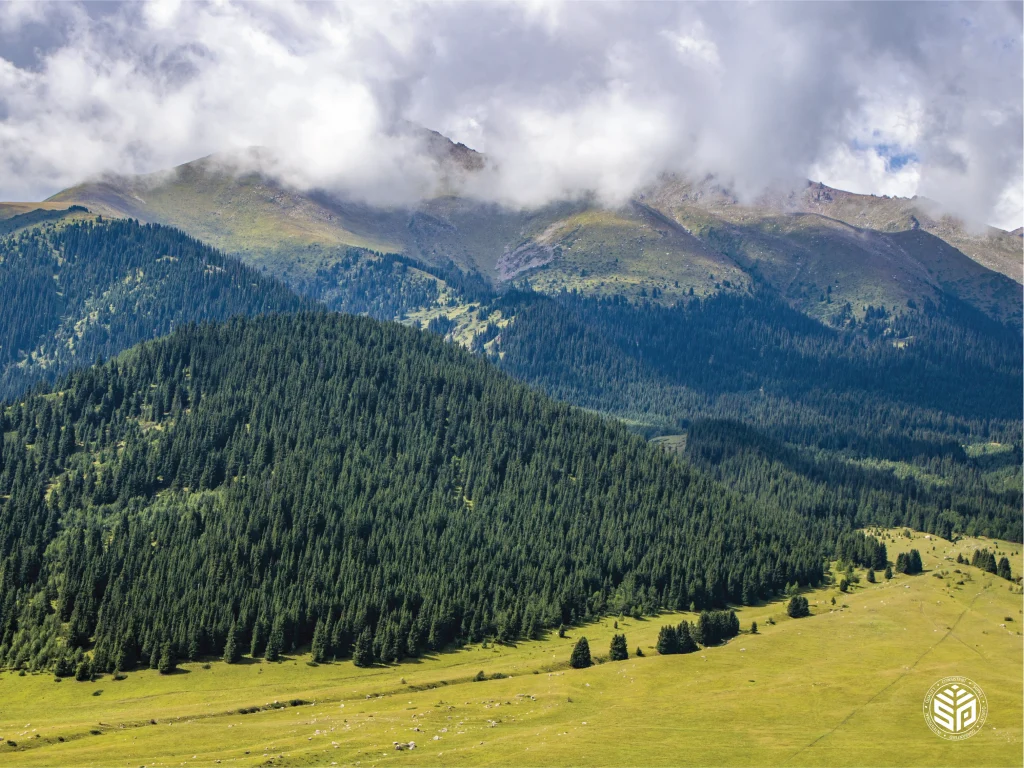
Dr Everard explained that around one-third of forestry-owned land in South Africa remains unplanted and conserved as wetlands, grasslands, river corridors, and indigenous vegetation.
These ecological corridors help protect biodiversity while supporting healthy water systems and wildlife movement. “Some of the healthiest grasslands in South Africa are actually found within forestry landscapes,” Dr Everard noted.
Forestry companies are also increasingly shifting toward non-invasive hybrid species and stronger environmental certification systems to improve sustainability even further.
CCA Treatment Extends Timber Sustainability Benefits
Beyond sustainably grown timber itself, preservative treatment also plays an important role in extending timber’s environmental benefits such as carbon sequestration for longer periods. However, one of the biggest misconceptions surrounding treated timber is that the treatment process significantly increases its environmental impact. So how does this impact the sustainability label of timber?
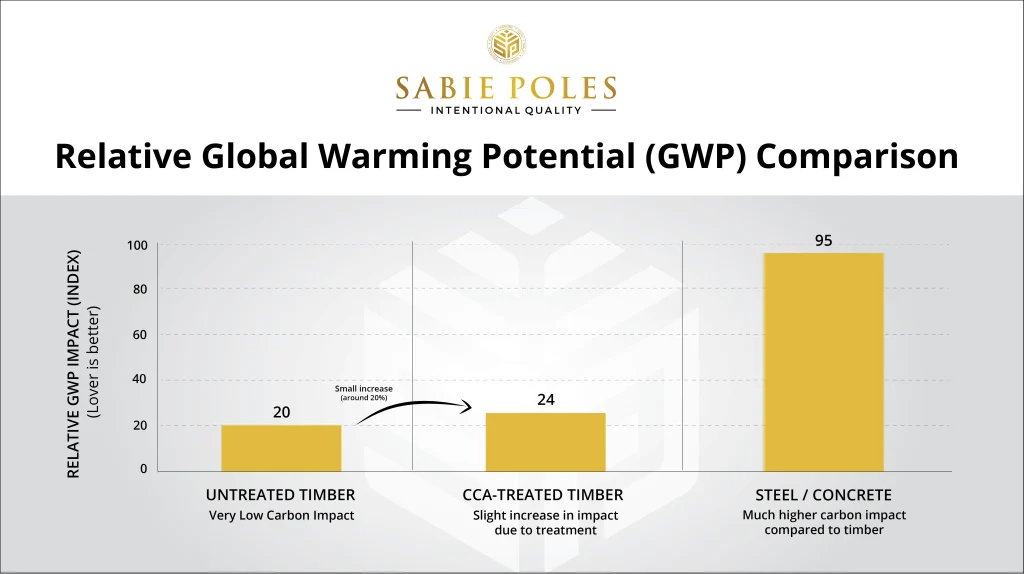
Research continues to show that timber remains one of the lowest-carbon construction materials available, even after preservative treatment.
According to research published by Red Stag TimberLab, the preservative treatment process has a relatively small impact on the overall global warming potential (GWP) of timber products. In fact, the report notes that:
“Treatment has a relatively minor effect on GWP impacts.”
This is because timber naturally stores carbon absorbed from the atmosphere during tree growth. As trees grow, they remove carbon dioxide from the air and lock that carbon into the wood fibres. Even after harvesting, processing, and treatment, the timber continues to act as a long-term carbon store throughout its service life.
Research indicates that approximately half the dry weight of timber is made up of stored carbon, making wood products highly effective carbon reservoirs when used in construction and infrastructure applications.
CCA treatment further strengthens the sustainability benefits of timber by dramatically extending its lifespan. Properly treated timber can remain in service for decades in demanding environments such as:
- Utility poles
- Agricultural fencing
- Outdoor structures
- Ground contact applications
- Structural timber systems
This longer service life plays a major role in reducing the overall environmental footprint of timber products. Longer-lasting timber means fewer replacements, lower resource consumption, reduced transportation emissions, and less waste generation over time.
Compared to materials such as steel and concrete, treated timber still maintains a significantly lower embodied carbon footprint while offering excellent durability and structural performance.
When sustainably grown timber is combined with professional CCA treatment, the result is a renewable, carbon-storing material designed for long-term performance and lower lifecycle environmental impact.
The Future of Sustainable Timber
Climate change remains one of the biggest long-term challenges facing forestry globally. Rising temperatures, changing rainfall patterns, pests, and fire risks all require smarter management strategies.
Fortunately, South Africa’s forestry sector is already investing heavily in:
• Climate-smart forestry research
• Improved hybrid species
• Fire management systems
• Better site-species matching
• Sustainable certification programs
The message from the webinar was ultimately optimistic.
Far from being an environmental villain, responsibly managed timber plantations are proving to be one of the most renewable, carbon-friendly, and economically beneficial materials available today, even after CCA treatment.
As Prof. du Toit concluded:
“Use more sustainably grown wood products from our plantations because it is an environmentally responsible choice.”
Are you ready to make the sustainable choice? Get in touch with Danie. We’re here to help you make the best timber choices for your project. Call/Whatsapp: 072 838 2838 or email: sales@sabietimber.co.za. We are always here to assist. We export to all SADC countries and internationally.